Service area · Chapel Hill
Hardwood Flooring In Chapel Hill
Chapel Hill’s housing includes nineteenth-century and early-twentieth-century homes in the local districts and a large run of mid-century through 1980s houses. Old hardwood is often worth evaluating before anyone covers or removes it.
The floors you find here
Chapel Hill’s housing runs from nineteenth-century fabric through a deep mid-century and late-twentieth-century inventory. Site-finished oak commonly appears in older homes, while later additions and subdivisions may introduce engineered wood, carpet, or resilient flooring. Matching transitions can matter as much as sanding the original rooms.
Town-published places
The Town names Franklin-Rosemary, Cameron-McCauley, and Gimghoul as its three local historic districts. Those district names establish local context only; they do not imply WFB completed work there.
The permit line, plainly
The Town of Chapel Hill—not Orange County—issues building permits and performs inspections. Its residential guidance includes interior remodels, while North Carolina law exempts many non-structural projects at or below the statutory threshold unless load-bearing or trade work is involved. We confirm the line for the actual flooring and stair scope.
What is local here
Chapel Hill has three local historic districts: Franklin-Rosemary, Cameron-McCauley, and Gimghoul. Exterior changes require a Certificate of Appropriateness, but the Town’s guidance excludes interior alterations from historic design review.
Refinish, recoat, or replace?
The existing floor makes the decision. These are the same Raleigh-market planning ranges published on our flooring cost page, not a project quote.
| Condition | Likely path | Published range |
|---|---|---|
| Solid boards with usable wood above the tongue | Sand, stain, and refinish | $3–$5/sqft; premium work to $8+ |
| Finish is dull but wood is not deeply damaged | Screen and recoat | $1–$2.50/sqft |
| Floor is missing, unsuitable, or beyond responsible sanding | Install solid, engineered, or LVP | Solid $15–$25; engineered $6–$12; LVP $7–$11 per sqft |
How a Chapel Hill flooring job runs
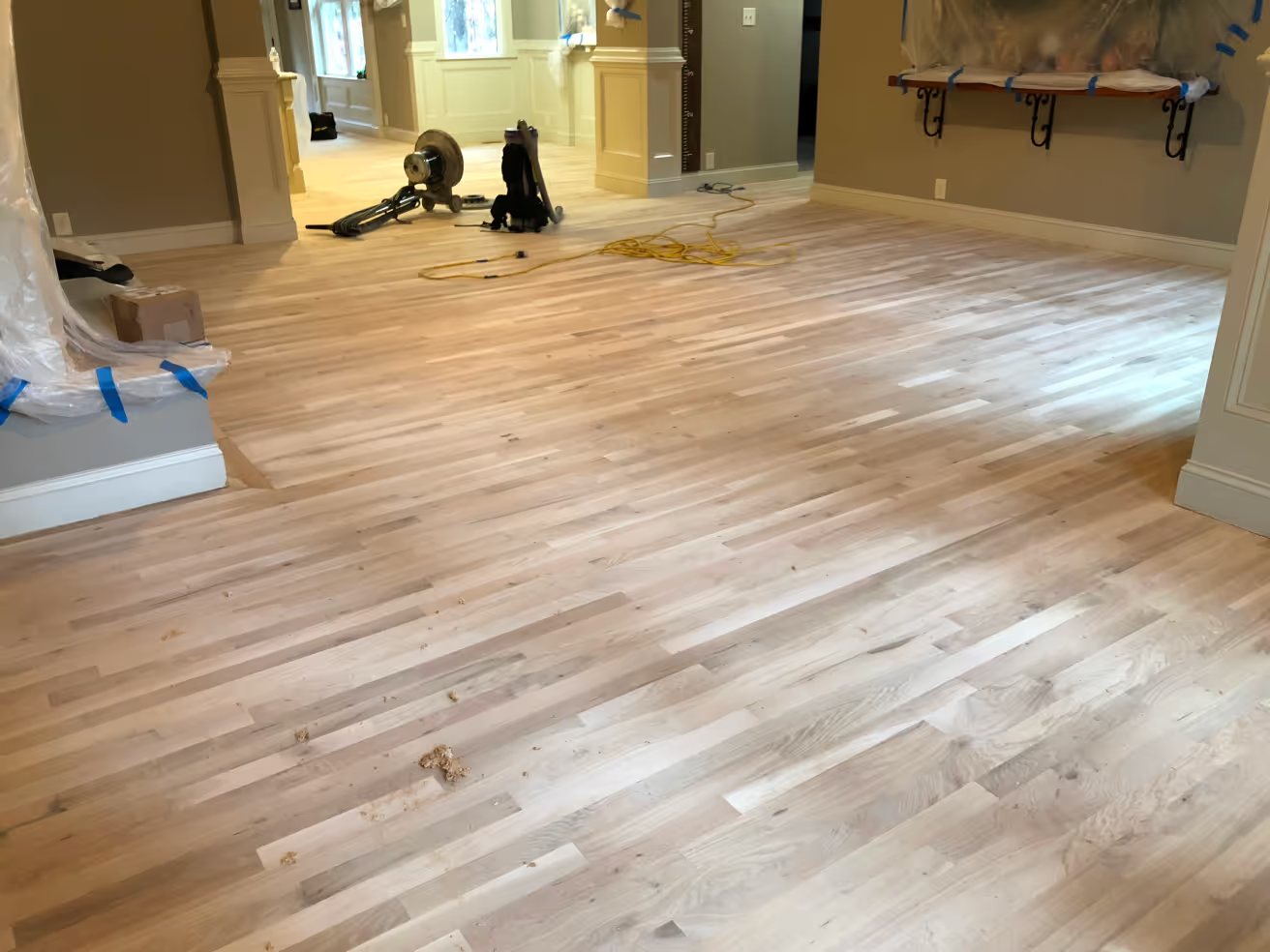
- See the floor in person. We inspect the surface, identify the material, and look at the subfloor conditions the scope exposes.
- Choose the responsible service. That may be a screen and recoat, a full refinish, repair plus refinishing, new hardwood, LVP, or staircase work.
- Prepare for the chosen system. Refinishing moves through sanding, stain when selected, and finish; installation starts with substrate preparation and layout.
- Complete the floor as one connected scope. Rooms, transitions, landings, and stairs are considered together so the finished surfaces make sense together.
Flooring services in Chapel Hill
Hardwood refinishing
Sand, stain when selected, and finish existing wood.
Screen and recoat
Renew a worn finish without sanding to bare wood.
Hardwood installation
Solid or engineered flooring with the substrate prepared first.
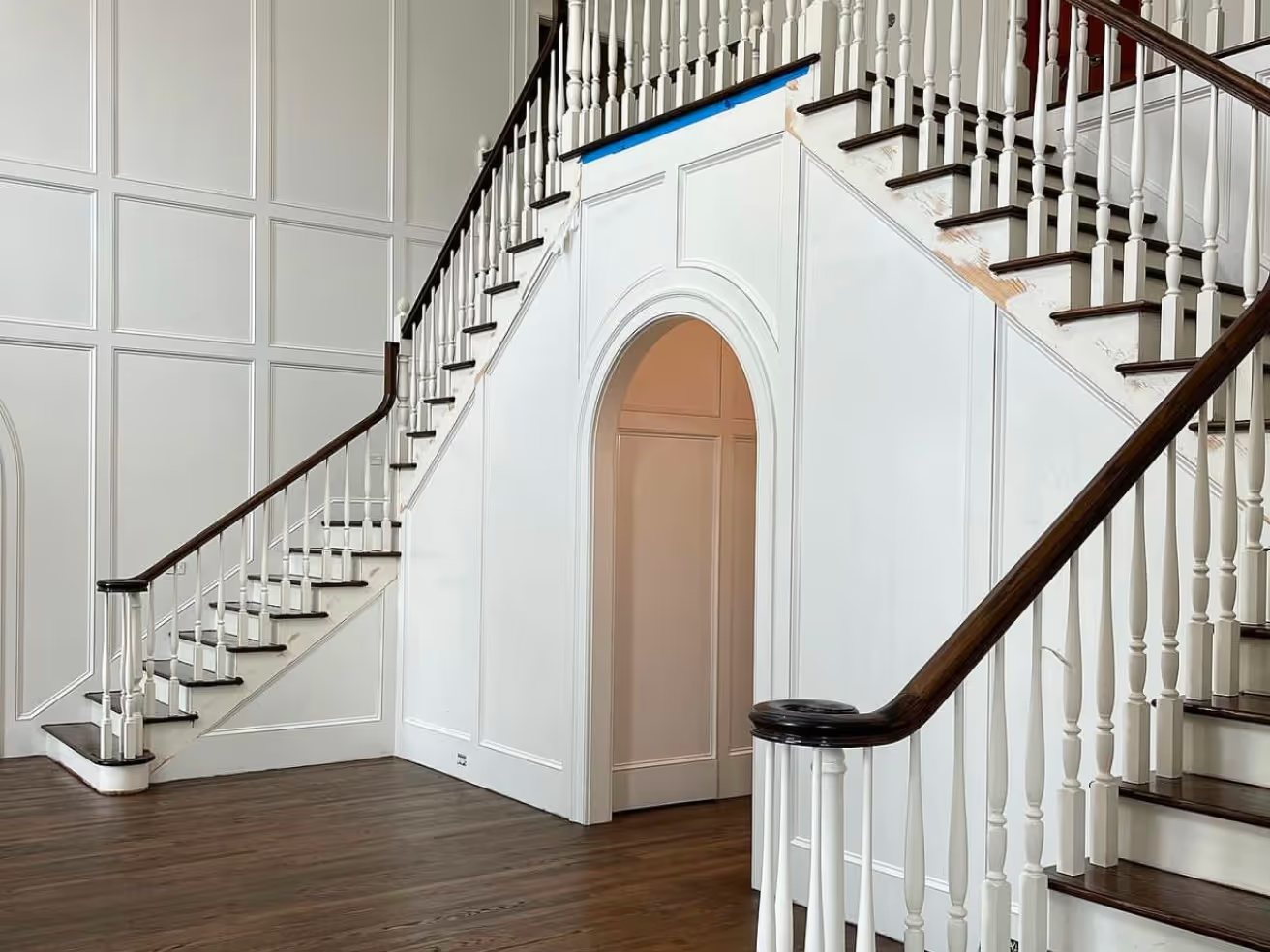
Staircase makeovers
Hardwood treads, risers, landings, and carpet conversions.
Luxury vinyl plank
Resilient flooring installed with the same attention to preparation.
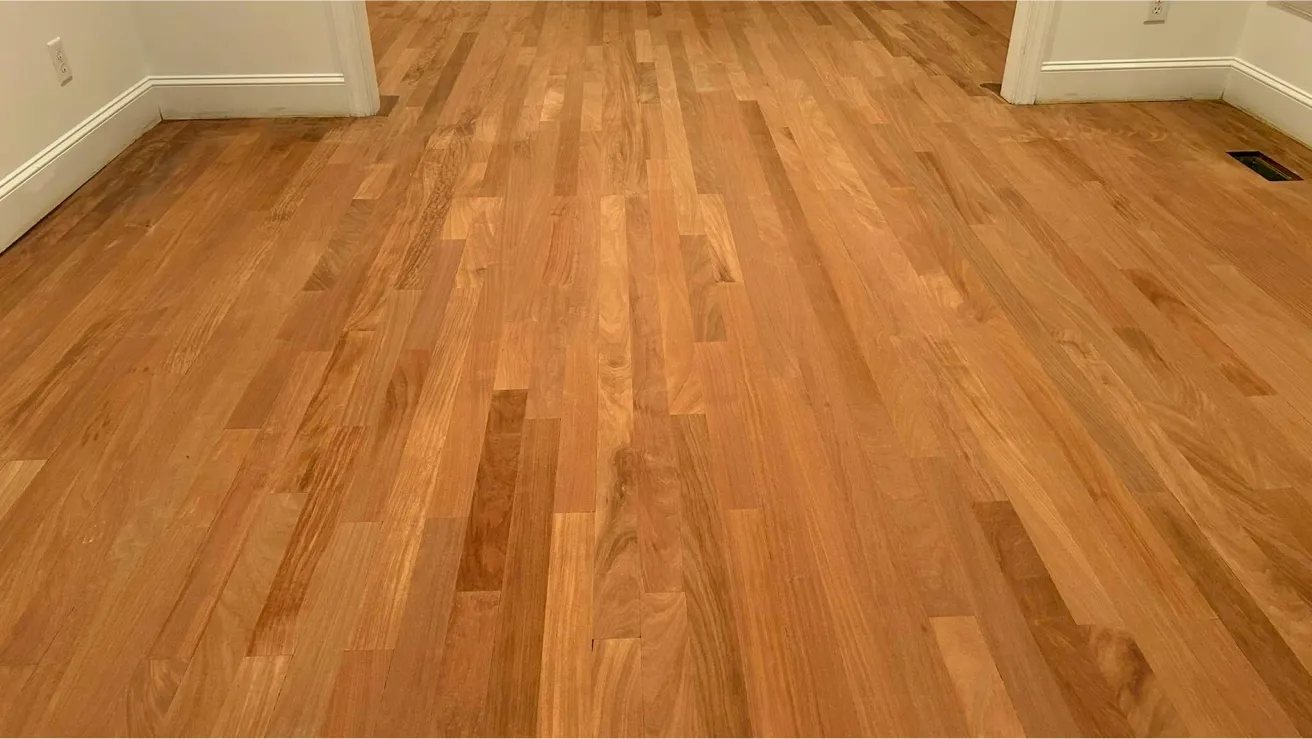
Get a free flooring estimate in Chapel Hill
Tell us what is underfoot and what you want it to become.
Loading the request form…
Frequently asked questions
Who handles Chapel Hill building permits?
The Town of Chapel Hill Building and Development Services Department issues permits and conducts building, electrical, plumbing, and mechanical inspections.
Does historic review cover interior hardwood?
No. Chapel Hill’s local historic design review applies to exterior changes; the Town’s guidance excludes interior alterations.
Call or text (919) 842-3745 for a free in-home estimate in Chapel Hill.